

- Official Website
- Visit Region
- prev
- next
Gallery

Regional Identity
Kastoria is one of the most distinctive and picturesque regions of Western Macedonia in northern Greece, known for its mountain landscapes, historic lake town, Byzantine heritage and strong cultural identity. Located near the borders with Albania, the region combines lakes, forests, alpine mountains and traditional Macedonian architecture with centuries of history and local tradition.
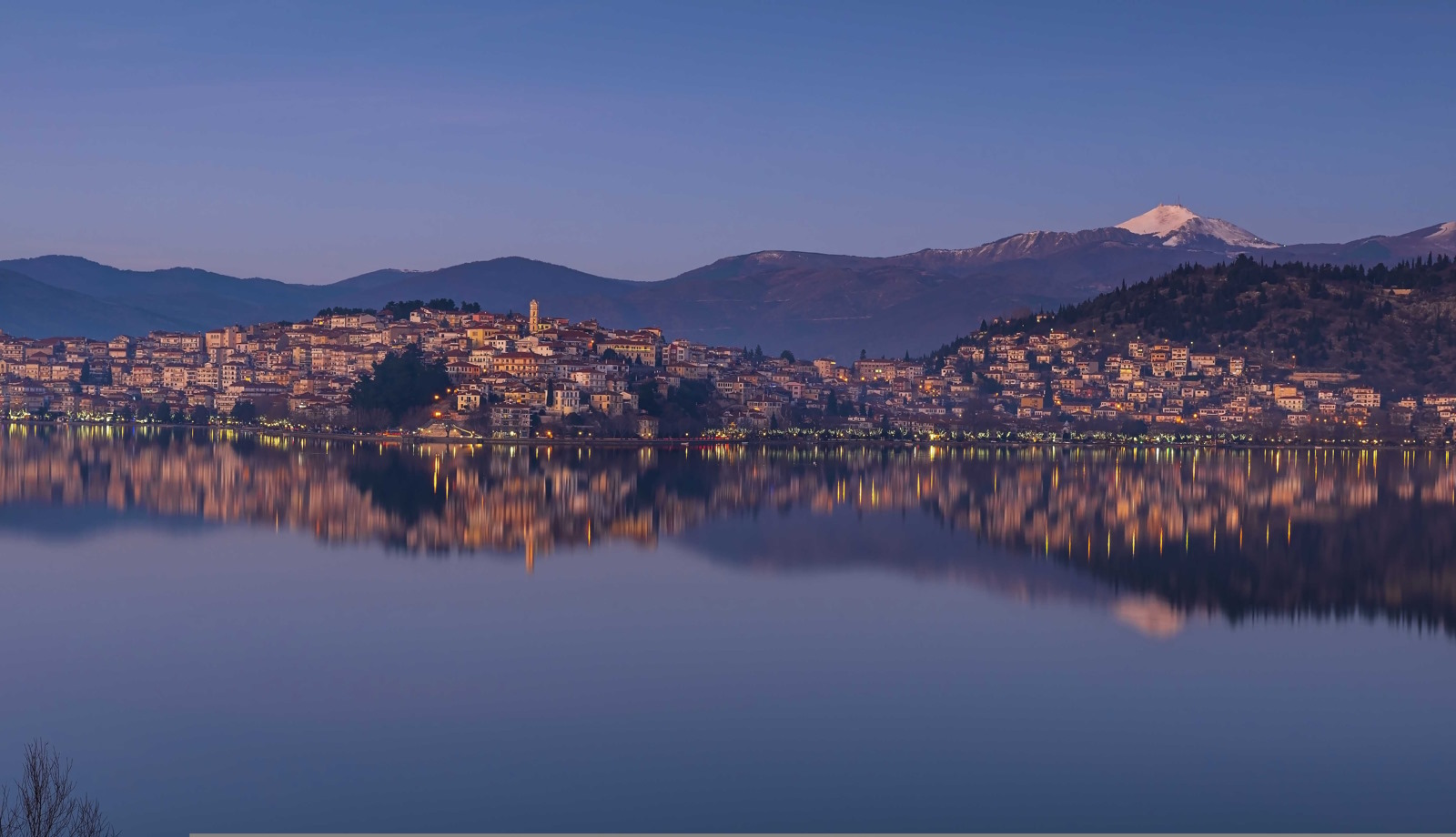
The city of Kastoria, built amphitheatrically around Lake Orestiada, is one of the most beautiful historic towns in Greece. The city is famous for its lakeside setting, stone mansions, Byzantine churches and traditional neighborhoods such as Doltso and Apozari. The lake and peninsula shape the identity of the city, while the surrounding mountains create a dramatic natural environment throughout all seasons.
Kastoria has long been associated with Byzantine culture, Orthodox Christianity and traditional craftsmanship. The region contains dozens of Byzantine and post-Byzantine churches, monasteries and historic buildings reflecting its importance during the Byzantine and Ottoman periods. Fur processing and fur trade historically played a major role in the local economy and helped establish Kastoria as an internationally recognized commercial center.
The wider region is mountainous and rich in natural beauty. Mount Grammos and Mount Vitsi dominate the landscape with forests, rivers, alpine meadows and hiking routes. The area is known for wildlife, mountain tourism, winter scenery and eco-tourism. Lake Orestiada remains one of the defining natural landmarks of Western Macedonia and supports local biodiversity and outdoor activities.
Traditional villages such as Nestorio, Dispilio and Argos Orestiko preserve local Macedonian traditions, architecture and rural life. Dispilio is especially important archaeologically because of its prehistoric lakeside settlement, one of the oldest Neolithic settlements discovered in Europe.
Kastoria is also connected to important cultural events and traditions. The River Party festival in Nestorio became one of Greece’s best-known summer music festivals, while local customs, religious celebrations and Macedonian culinary traditions remain deeply rooted in daily life.
Agriculture, tourism, trade and local production continue to support the regional economy. Apples, beans, fruits and agricultural products from the wider Western Macedonia region remain important, alongside growing tourism connected to nature, history and culture.
Today, Greeks originating from Kastoria maintain strong emotional and cultural ties with their homeland through village roots, Orthodox traditions, family heritage, local customs and the preserved identity of Western Macedonia shared across Greece and throughout the global Greek diaspora.
Video
News

Οι τελευταίες ειδήσεις από την Καστοριά με τη συνεργασία μας με το fouit.gr
- Θέρμανση πολυκατοικίας – Πότε απαλλάσσομαι από δαπάνες
- ΛΙΘΟΣ ΑΕ: Ζητείται Υπάλληλος Γραφείου (Μέσω Προγράμματος ΔΥΠΑ 30+)
- Λήξη συναγερμού στο 4ο Δημοτικό – Στα ίχνη του φαρσέρ η Αστυνομία (ρεπορτάζ)
- Αλλάζει η ώρα την Κυριακή
- Πότε θα πραγματοποιηθεί η «Λευκή Νύχτα» με τον Ορέστη! – Μέγα Χορηγοί Κουφώματα DAUWIN–ΠΑΠΑΒΑΣΙΛΕΙΟΥ & Glass Design (Glass 4U)–Μίνα Παπαβασιλείου