

- Official Website
- prev
- next
Gallery

Regional Identity
Thesprotia is the northwestern gateway of Epirus and one of the most naturally diverse regions of Greece, known for its mountainous landscapes, Ionian coastline, rivers, traditional villages and deep historical heritage. Bordering Albania and the Ionian Sea, the region has long served as a cultural and geographical crossroads between Greece, the Balkans and the wider Mediterranean.
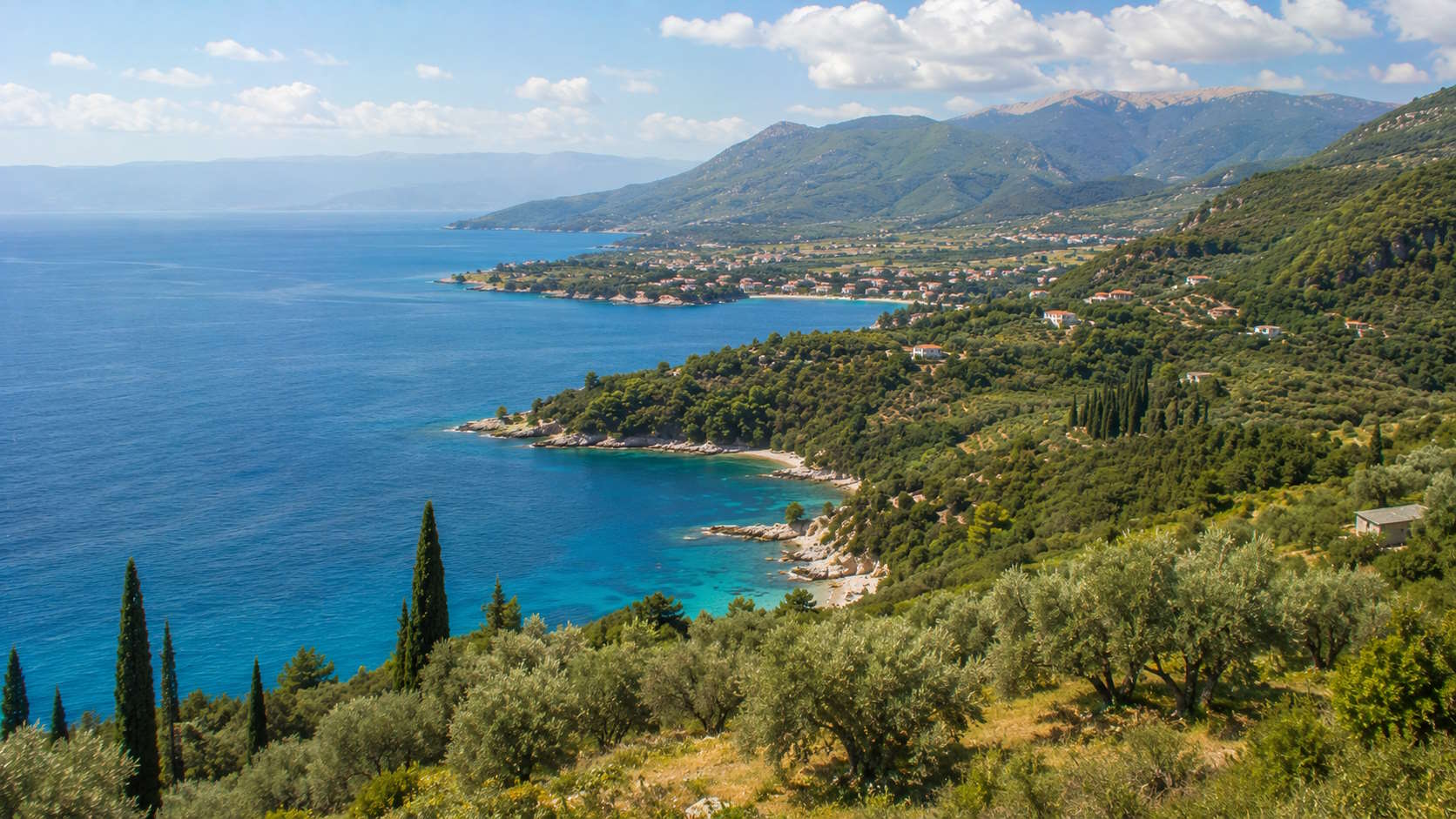
The landscape of Thesprotia is dominated by mountains, valleys, forests and rivers, creating a region of exceptional natural beauty. Mountain ranges such as Souli, Tsamanta and Paramythia surround fertile plains and river valleys, while the rivers Acherontas and Kalamas shape much of the region’s natural environment. Along the western coast, the Ionian Sea forms picturesque bays, beaches and seaside settlements that combine natural beauty with traditional Epirot identity.
The capital, Igoumenitsa, is one of the most important ports of Western Greece and serves as a major connection point between Greece, Italy and the Ionian Islands. Over recent decades, the city has developed into an important transportation and commercial hub while maintaining strong ties to the traditions and culture of Epirus.
Thesprotia is deeply connected to the history and identity of Epirus. Historic places such as Souli became symbols of resistance and freedom during the Ottoman era, while traditional settlements including Paramythia, Filiates and Margariti preserve authentic Epirot architecture, local customs and cultural heritage. Coastal destinations such as Sivota and Perdika are internationally known for their crystal-clear waters, green landscapes and Ionian beauty.
The region is also rich in religious and historical landmarks, including monasteries, castles, archaeological sites and traditional stone-built villages that reflect centuries of Byzantine, Venetian and Ottoman influence. The natural landscapes of Acherontas River, Lake Kalodiki and the mountainous areas of Epirus continue to attract visitors seeking nature, history and authentic Greek traditions.
Agriculture, fishing, livestock farming and tourism remain closely connected to the local economy and identity of the region. Traditional Epirot music, cuisine and family customs continue to play an important role in community life across villages and towns.
Today, diaspora communities from Thesprotia around the world continue to preserve strong emotional and cultural ties with their ancestral homeland, maintaining Epirot traditions, family roots and regional heritage across generations.
News

Οι τελευταίες ειδήσεις για την Θεσπρωτία από thespro.gr
- Με άλογα η μεταφορά της εικόνας του Αγίου Δημητρίου στο παλιό χωριό
- Γρηγόρης Δημητριάδης από την Ξάνθη: Δεν παράγεις πολιτική με το TikTok (video)
- Eλαιοτριβείο "Γούλα" στο Γραικοχώρι Ηγουμενίτσας (+ΒΙΝΤΕΟ)
- Έπιπλα Γεωργίου: Ανανεώνεται η αγαπημένη κρεβατοκάμαρα Loft by Letto
- Κινητοποίηση της Τ.Ε. Θεσπρωτίας του ΚΚΕ στα διόδια της Τύριας