

- prev
- next
Gallery

Regional Identity
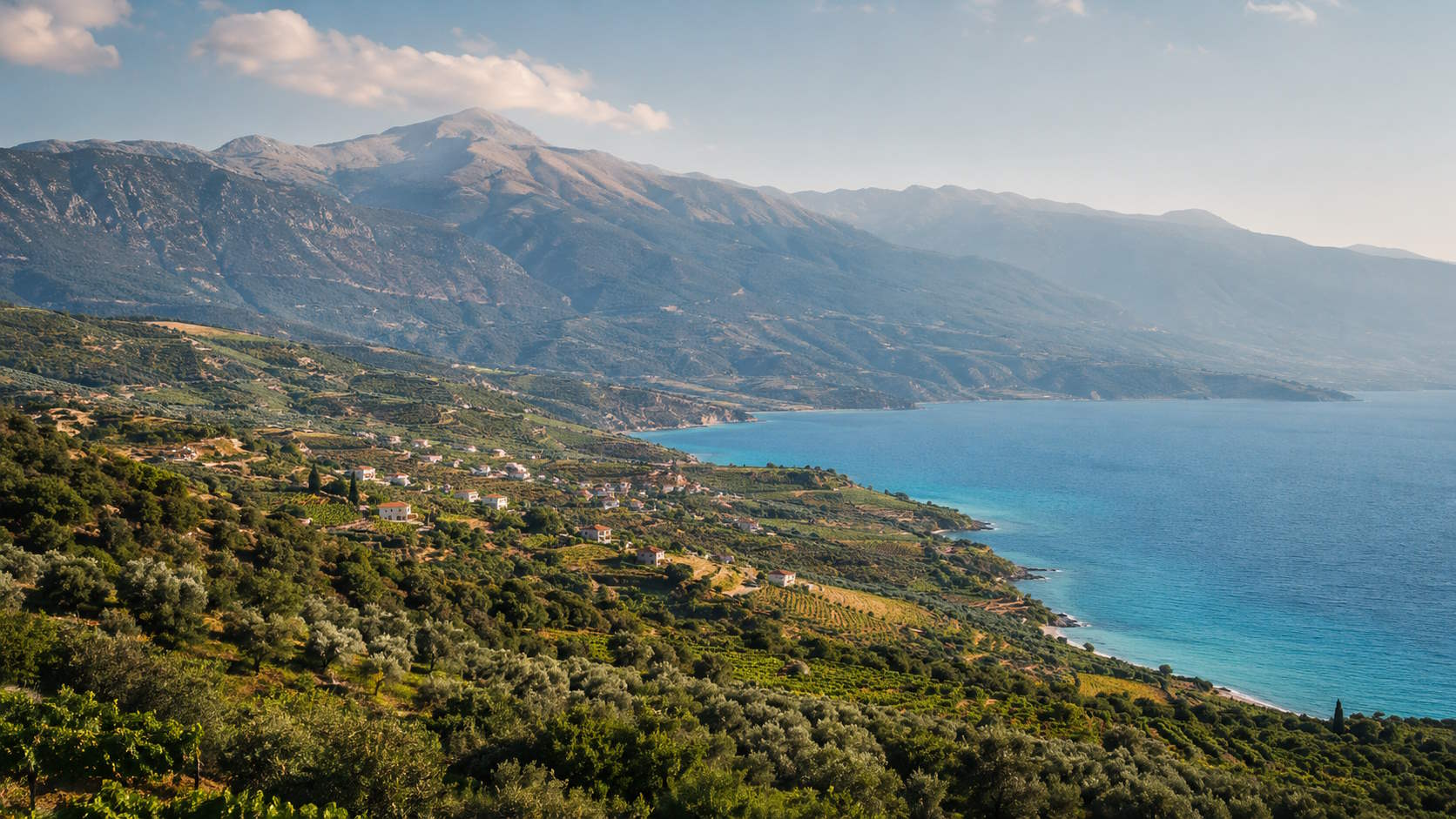
Achaia is one of the most historic and geographically diverse regions of the Peloponnese, located on the northwestern coast of southern Greece. Bordered by the Gulf of Patras, the Gulf of Corinth and the Ionian Sea, Achaia combines mountainous landscapes, fertile valleys, coastal towns, historic monasteries and major archaeological and cultural landmarks.
The region has been inhabited since prehistoric times and played an important role throughout ancient Greek history. The Achaeans established important cities such as Patras and Aigio, while the Achaean League became one of the most influential political federations of ancient Greece. During the Greek War of Independence in 1821, Achaia again became central to Greek national history, as the revolution against Ottoman rule symbolically began at the historic Monastery of Agia Lavra near Kalavryta.
The capital and largest city of the region is Patras, the third largest city in Greece and the principal gateway connecting Greece with Italy and Western Europe. Patras is an important commercial, industrial, university and cultural center known for its port, historic architecture, vibrant atmosphere and the world-famous Patras Carnival. The city also hosts the monumental Church of Saint Andrew, one of the most important Orthodox churches in Greece.
Achaia is predominantly mountainous, with approximately three quarters of its territory covered by mountains and hills. The highest peaks are Mount Chelmos and Mount Erymanthos, which dominate the inland landscapes with forests, rivers, gorges and traditional villages. The mountainous areas around Kalavryta are among the most scenic destinations in Greece, offering winter tourism, hiking, monasteries and historic landmarks.
Kalavryta is closely associated with both the Greek Revolution and modern Greek history. The area is home to the historic Monastery of Agia Lavra and the impressive Monastery of Mega Spileo, built dramatically into the cliffs of a mountain gorge. The Kalavryta Ski Center on Mount Chelmos is one of the most important winter destinations in Greece.
The region is also famous for its natural attractions, including the Cave of the Lakes near Kastria, unique wetlands around Cape Araxos, fertile vineyards and beautiful coastal landscapes. Eastern Achaia is particularly known for wine production and forms part of one of Greece’s most respected wine regions.
Along the coastline, towns and villages such as Aigio, Akrata and Diakofto combine beaches, mountain scenery and traditional Peloponnesian culture. The Rio–Antirrio Bridge, one of the largest cable-stayed bridges in the world, connects the Peloponnese with Central Greece and stands as one of modern Greece’s most important engineering landmarks.
Today, Greeks originating from Achaia maintain strong cultural and emotional ties to the region through family heritage, Orthodox traditions, village roots, local festivals, mountain culture and the enduring historical identity of the Peloponnese within the global Greek diaspora.
News

Οι τελευταίες ειδήσεις από patrasevents.gr
- Κάτω Βασιλική: ΙΧ κατέληξε στη θάλασσα (video)
- Πάτρα: Νέα πεζoδρόμια στην έξω Αγυιά
- Πάτρα: Ο έλεγχος στο λιμάνι έφερε τις χειροπέδες
- Η Παναχαϊκή χαμογέλασε στη ρώσικη ρουλέτα των πέναλτι - Πρόκριση θρίλερ για την Πατρινή ομάδα
- Η Παναχαϊκή χαμογέλασε στη ρώσικη ρουλέτα των πέναλτι - Πρόκριση θρίλερ για την Πατρινή ομάδα