

- Official Website
- prev
- next
Gallery

Regional Identity
Viotia, historically known as Boeotia, is one of the most historically significant and geographically diverse regions of Central Greece. Located between the Corinthian Gulf and the Euboean Gulf, west of Attica and near Athens, the region combines ancient history, mountain landscapes, fertile plains, traditional villages and important cultural heritage.
The region has been inhabited since antiquity and played a major role in Ancient Greece. Viotia was home to powerful ancient cities such as Thebes, Plataea, Orchomenos and Chaeronea. Ancient Thebes was one of the most influential city-states of Greece and the legendary homeland of figures such as Hercules, Oedipus and Epaminondas. The region is also closely connected to major battles and historical events that shaped Greek civilization.
Livadia serves as the administrative capital of Viotia. Built near the springs of the Erkina River and surrounded by hills and greenery, the city combines historical landmarks with a strong local identity. The medieval castle of Livadia and the famous oracle of Trophonius connect the city directly to ancient Greek mythology and history.
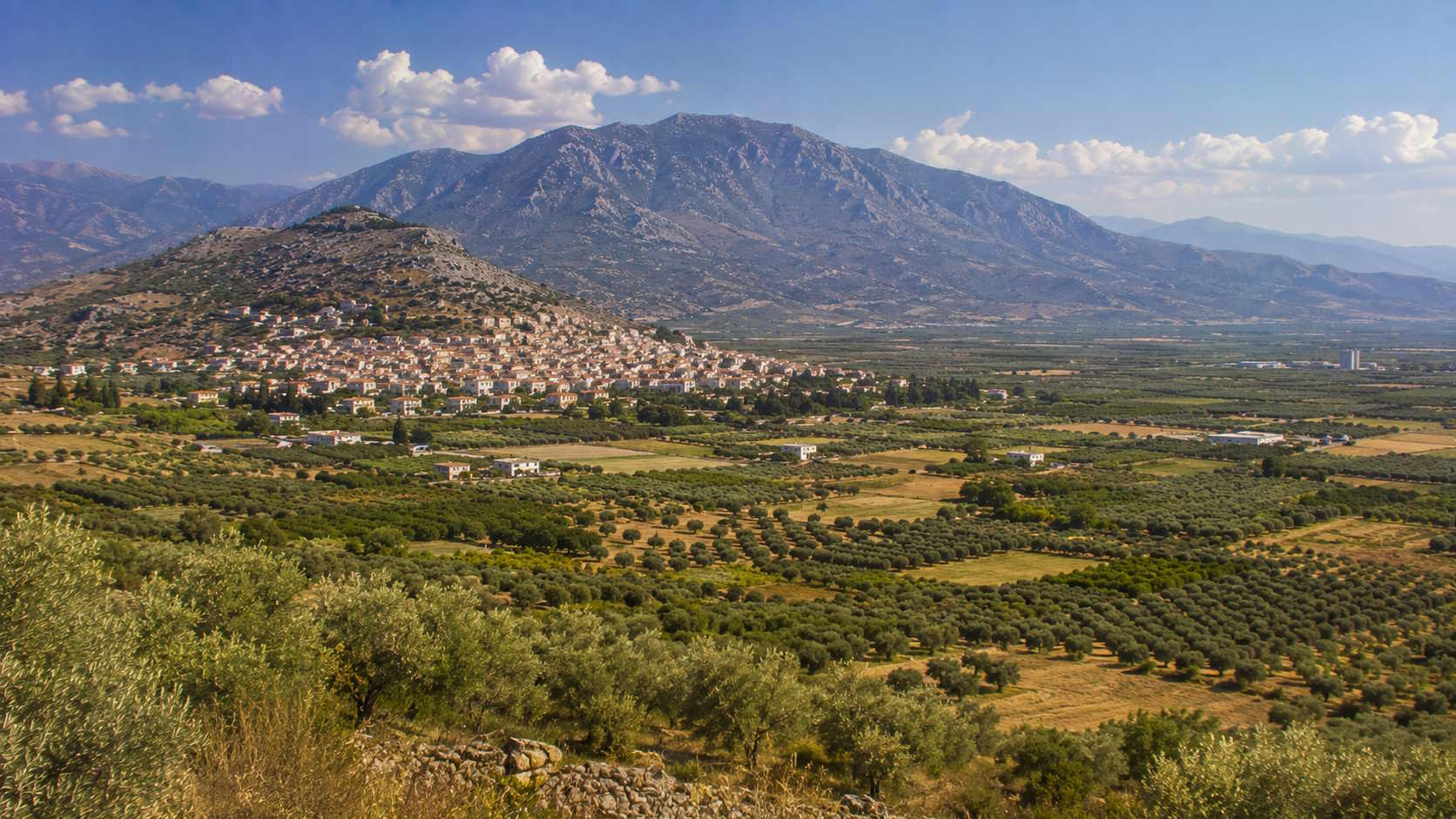
Viotia is known for its fertile plains, agricultural production and mountain landscapes. Olive groves, vineyards, cereals and farming communities define much of the regional economy. The area also includes forests, rivers, gorges and coastal zones along both the Corinthian and Euboean gulfs.
One of the most important landmarks of the region is the Monastery of Hosios Loukas, a UNESCO World Heritage Site and one of the most important Byzantine monasteries in Greece. The monastery represents the spiritual and religious heritage of Central Greece and attracts visitors from around the world.
The mountain village of Arachova, located near Mount Parnassos, has become one of Greece’s most famous winter destinations. Traditional stone architecture, mountain culture, local cuisine and access to the Parnassos ski center make the area a major tourism destination throughout the year.
Other important locations include Distomo, Plataea, Orchomenos, Tanagra and Antikyra, each connected to ancient history, traditional life and regional heritage. The coastline of Viotia also offers beautiful beaches and seaside settlements along the Corinthian Gulf.
Today, Greeks originating from Viotia maintain strong cultural and emotional ties with their homeland through village roots, Orthodox traditions, historical pride, local customs and the preserved identity of Central Greece shared across Greece and throughout the global Greek diaspora.
News

Οι τελευταίες ειδήσεις από tvstar.gr
- Στρατηγός Αλεξάκης, Μητροπολίτης Γεώργιος και Στέλλα Κυβέλου για Τουρκολυβικό, Καλώδιο και Κρίση Αξιών (video)
- Επίθεση τεσσάρων ατόμων σε 47χρονο στο Ρέθυμνο για οπαδικό πανό – Χτύπησαν και αστυνομικό, τρεις συλλήψεις
- Αποστολή της Περιφέρειας Στερεάς Ελλάδας στη Νέα Υόρκη για την ενίσχυση της τουριστικής εξωστρέφειας
- Περιπετειώδης σύλληψη 43χρονου που έκλεβε υλικά από οικοδομή στην Παλλήνη – Προσπάθησε να εμβολίσει μηχανές της ΔΙΑΣ με το αυτοκίνητό του
- Εύβοια: Σύλληψη και “τσουχτερό” πρόστιμο για πυρκαγιά